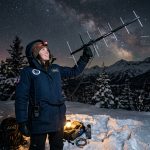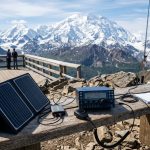
Continuous Wave (CW) telegraphy remains one of the most efficient modes of radio communication ever invented. For amateur radio operators navigating Alaska’s remote backcountry, Morse code offers unmatched signal penetration through heavy ionospheric noise, atmospheric static, and weak signal conditions where voice transmissions fail to break through.
A CW signal concentrates transmitter power into a narrow bandwidth of barely 100 Hertz, compared to the 2,400 Hertz required for single sideband voice. This tight spectral density allows low-power QRP stations to span thousands of miles using lightweight transceivers and simple wire antennas suspended between northern spruce trees.
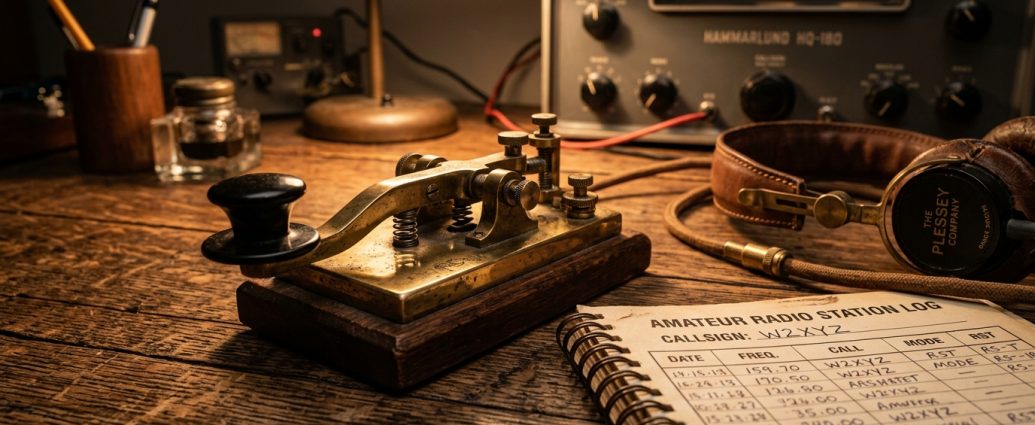
Mastering Morse code is both an art form and a practical wilderness survival skill. Alaskan hams utilize manual brass straight keys and high-speed iambic paddles to log contacts with distant stations worldwide. In high-latitude environments prone to polar cap absorption, the steady rhythmic pulse of CW remains the gold standard for reliable long-range radio contact.
Did you enjoy this?
Log in to like this post.